

Building individualized computational models that help us better understand human development and support it through personalized enrichment, across life
Building individualized computational models that help us better understand human development and support it through personalized enrichment, across life
Human development does not follow a single path. Every individual grows through a unique interaction of biology, behavior, relationships, and environment. While broad patterns exist, the timing, pace, and direction of growth can vary significantly from one person to another. Yet many of the tools we use to understand development rely on snapshots: assessments, observations, and measurements captured at isolated points in time. These snapshots are valuable, but they cannot fully capture how development unfolds. To better understand human development, we need models that can follow trajectories over time, integrating information across multiple systems rather than viewing each signal in isolation.
The patterns that emerge early in life can influence learning, communication, wellbeing, and health throughout the lifespan. Understanding developmental trajectories more deeply may help us better understand the rich variation of the human condition, from neurodiversity and communication differences to cognitive health later in life. The earlier we understand how trajectories emerge, the greater our opportunity to provide meaningful support that aligns with each individual.
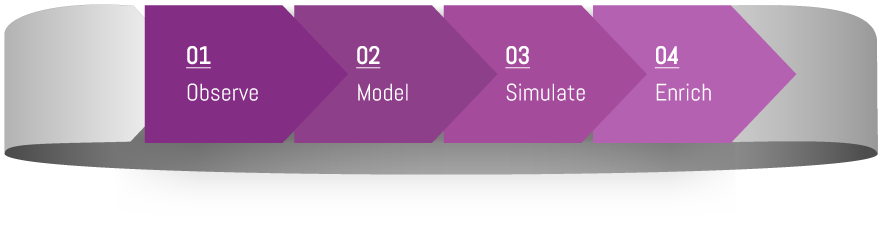
Understanding begins with data gathered over time.
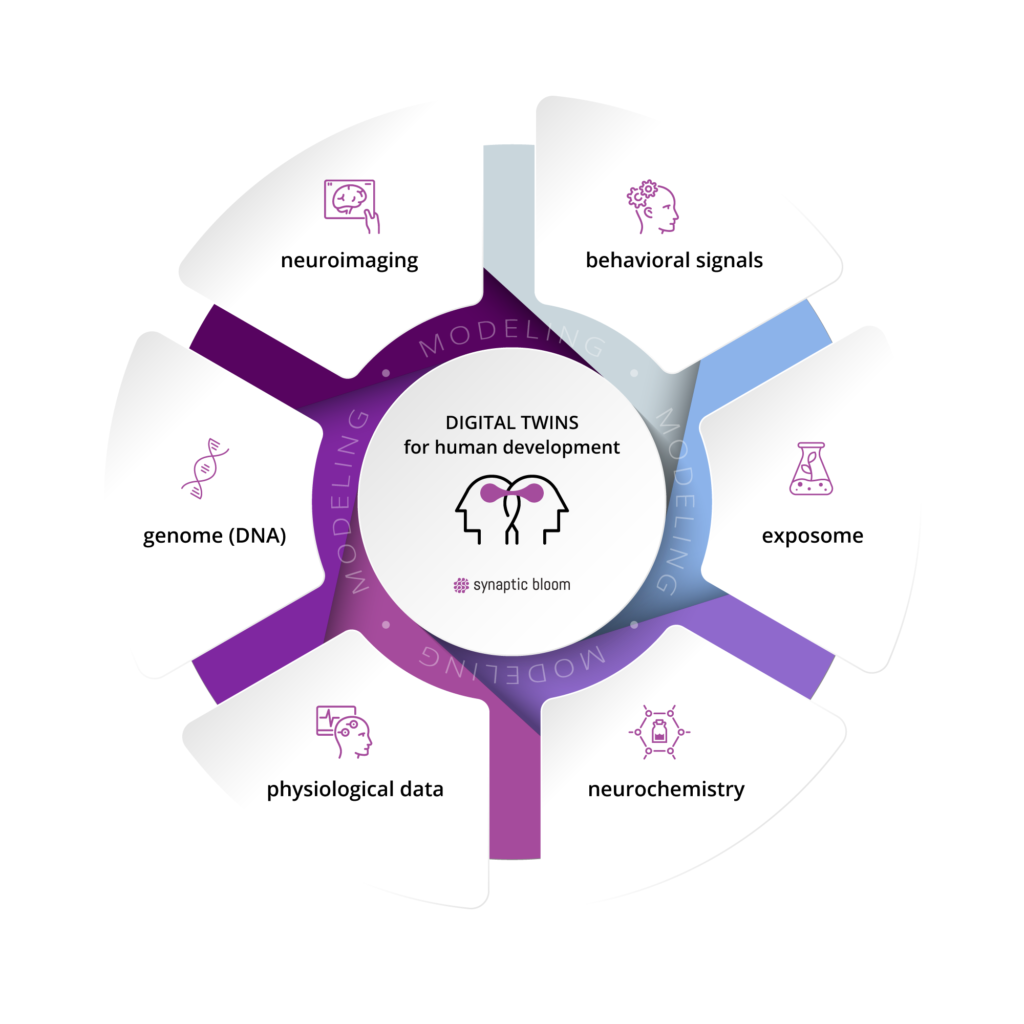
We aim to bring together diverse sources of information, including behavioral signals, biological measures, and the environments in which people grow and learn. No single signal tells the whole story. Meaning emerges from how they interact.
The information is used to build individualized computational models that evolve over time.
Rather than relying on static assumptions, these models seek to reflect how development is actually unfolding, incorporating new information as it becomes available.
Models create the opportunity to explore trajectories and better understand how different factors may contribute to growth over time.
Simulation allows questions to be explored within the model before decisions are considered in the real world.
The ultimate goal is not prediction for its own sake.
It is to support more personalized enrichment by helping caregivers, educators, clinicians, and families better understand the unique trajectory of each individual.
Built through collaboration between families, researchers, clinicians, engineers, and developmental scientists.
Human development is one of the most important and least understood frontiers in science.
We believe advances in artificial intelligence and computational modeling should be used responsibly, transparently, and in service of people.
Synaptic Bloom was founded to advance the responsible development and application of individualized computational models across the rich variation of the human condition.
As a Public Benefit Corporation, our commitment to individuals, families, and communities is embedded in how the company is legally structured, not simply how we describe ourselves.
This is an interdisciplinary effort that brings together families, researchers, clinicians, engineers, and developmental scientists around a shared goal: building a deeper understanding of human development and more personalized ways to support it.
FAMILIES
Help shape the future of human development research.
RESEARCHERS & CLINICIANS
Contribute expertise, collaboration, and insight.
BUILDERS & PARTNERS
Help create the tools and infrastructure needed for the next generation of developmental understanding.